Tom Lennie reviews ‘The Great Awokening: Cultural Progressivism and the church in Britain’ by Martin Charlesworh (2025)
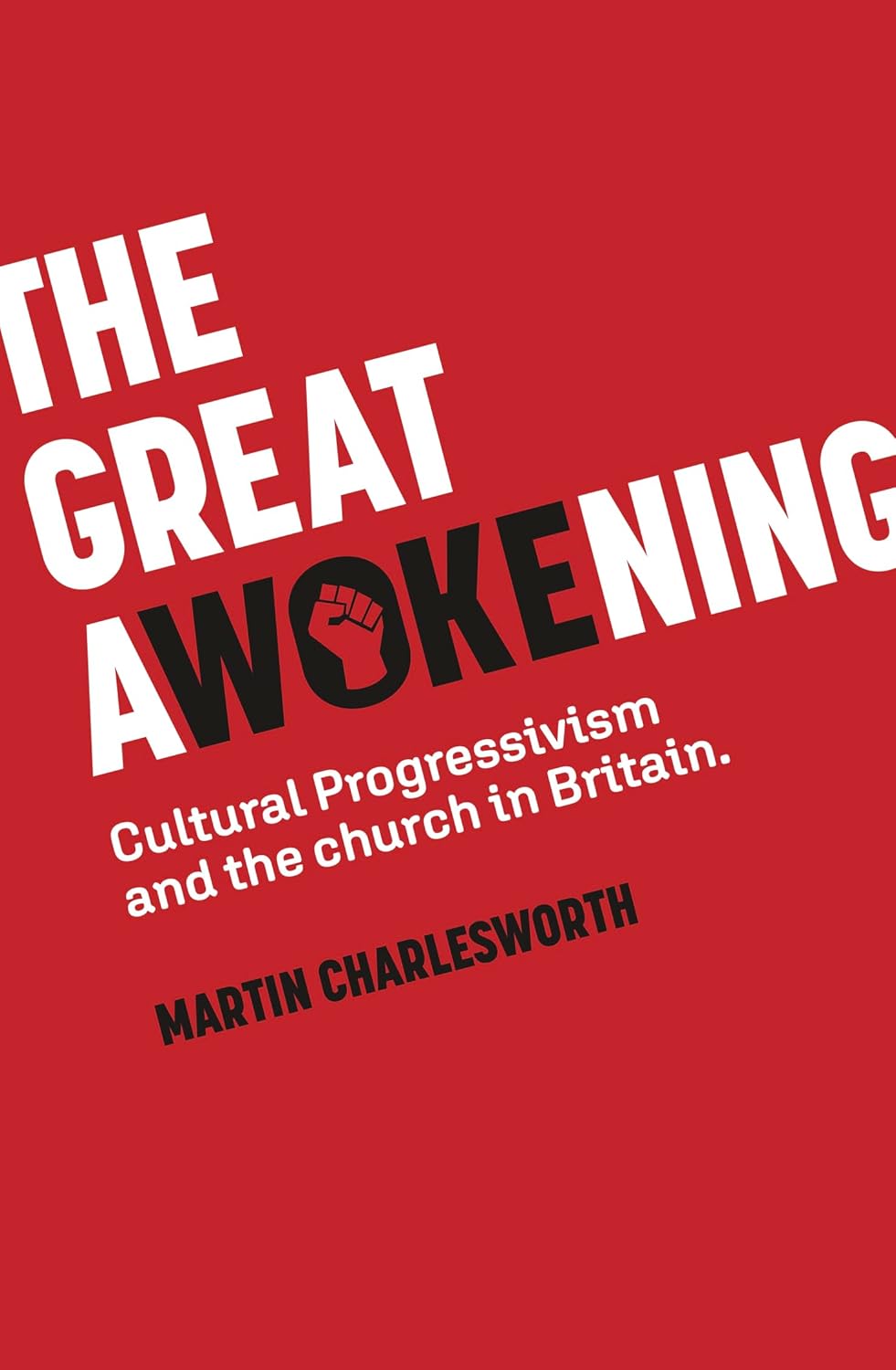 This fittingly titled book aims at tackling head-on the powerful new ideology that has been overtaking our culture in recent years – that of cultural progressivism (some call it cultural Marxism).
New ideology / vocabulary
This ideology brings with it as whole new vocabulary , with terms such as ‘gender fluidity’, ‘social binary’, ‘hegemonic power’, ‘terfs’, ‘micro aggressions’, ‘intersectionality’ receiving common usage.
Aware that this new ideology has begun to overwhelm the Church, confusing pastors and lay members alike, who have little idea how to respond, this book seeks to equip Christians in local churches to understand cultural progressivism and to formulate a coherent and creative response to the many challenges it brings to Christian discipleship.
A former teacher, business manager and charity leader, Martin Charlesworth has pastored several churches, where he has placed strong emphasis on social action, and community engagement. The book comes in three sections:
The road to the Great Awokening
Part One sets the scene – outlining in some detail exactly what cultural progressivism is, and how it came to dominate Western society over the course of the past ten years through sudden ‘moral panics’ such as the transgender moment (2015), the Black Lives Matter moment (2020) and the essential use of social media.
Charlesworth introduces the notion of critical theory, with its focus on minority identity groups rather than economic class – with its five essential underlying concepts:
-
The social binary (society divided by power)
-
Hegemonic power (dominant ideas which control the oppressed)
-
Lived experience (the priority of the voice of the oppressed)
-
Social justice (equal outcomes for all), and
-
Intersectionality (the overlapping nature of various social divisions).
This book seeks to equip Christians in local churches to understand cultural progressivism and to formulate a coherent and creative response to the many challenges it brings to Christian discipleship.
The author places particular emphasis on what he terms ‘the sacred trinity’ of identities:
-
The anti-racism movement
-
Radical feminism
-
Gender ideology (and the rise of the LGBTQ+ movement)
The UK’s draconian crackdown on free speech (with the ominous rise of ‘hate speech’ legislation) is accorded an informative chapter of its own, as is the thorny issue of decolonisation – not least as it relates to Israel and the pro-Palestinian movement.
With a deconstruction of the problematic logic of ‘reparations for slavery’, and its recognition that cultural progressivism has played its part in fanning the flames of rising racism (antisemitism) this most helpful and important chapter concludes that labelling Israelis as white oppressor colonialists’ who have no right to live in the land of Israel is further absurd propaganda from the CP camp.
Biblical perspectives
Part Two offers a biblical perspective on the key concepts of the ideology behind cultural progressivism, and reveals how every key tenet of CP ideas is misplaced, mistaken or only partial true from a scriptural basis.
... labelling Israelis as white oppressor colonialists’ who have no right to live in the land of Israel is further absurd propaganda from the CP camp.
In this section also, Charlesworth gives a chapter each to the consideration of ethnicity from a biblical perspective; the reimagining of the creative partnership of men and women; and gender identity in creation and Christ.
Local church community
Part Three is practical, looking at how local church communities can respond effectively to cultural progressivism whilst maintaining faithfulness to the Bible.
There is a focus on practical discipleship, and on training church leaders about cultural progressivism, as well as on reimagining local church community – with an emphasis on ethnic diversity, caring for the poor and marginalised, and on God’s empowering presence.
Insightful and absorbing
With a helpful glossary, a list of Selected Resources, and full end-notes, The Great Awokening is a rich tome indeed, easy to read and offering a compelling analysis of the current UK cultural environment. This is no mindless rant – but a carefully considered study. Throughout, Charlesworth writes from a respectful, unbiased, compassionate position, with no apparent axe to grind.
It is a brave, insightful and absorbing read. For a one-volume oversight into the cultural progressive movement that is radically affecting the western world, I highly commend this clear, factual and very timely analysis.
The Great Awokening (314pp) is published by Influence Resources and is available from St Andrew's Bookshop for £11.99 plus p&p.
Tom Lennie, 06/03/2026