A Pattern for Renewal 2: Hezekiah’s Passover
A study of 2 Chronicles 30
 Nick Thompson recently began a four-part mini-series study on 2 Chronicles - A Pattern for Renewal - with a consideration of chapter 29; Hezekiah’s restoration of Temple worship. This week he takes a closer look at chapter 30.
2 Chronicles 30 offers a profound portrait of national restoration and spiritual unity through the observance of the Passover. After purifying the temple in chapter 29, King Hezekiah now leads the nation into covenant renewal by reinstituting one of the most sacred feasts in Israel’s history. In this chapter, we witness the themes of repentance, grace, inclusion, and joyful worship converge.
While considering the covenantal significance of Passover and the spiritual geography of sacred events, this study explores how 2 Chronicles 30 serves not just as a historical moment but as a paradigm for revival. The chapter is a masterclass in leadership, unity, and the redemptive power of worship.
The Call to Celebrate: Reinstating Passover (2 Chronicles 30:1-5)
“Hezekiah sent to all Israel and Judah, and wrote letters also to Ephraim and Manasseh, that they should come to the house of YHWH at Jerusalem to keep the Passover to YHWH, the God of Israel.” (v. 1)
The chapter begins with an extraordinary move: Hezekiah reaches out beyond Judah to include the northern tribes of Israel, many of whom had already suffered exile at the hands of Assyria. His invitation to Ephraim and Manasseh is both political and profoundly theological, a call for reconciliation under YHWH.
By restoring Passover, Hezekiah restores Israel’s memory and covenantal purpose.
Passover is not merely a feast but a national identity marker. It recalls the Exodus, God’s act of deliverance (Exodus 12). By restoring Passover, Hezekiah restores Israel’s memory and covenantal purpose. Additionally, it emphasises the significance of Jerusalem as the central sacred space. The unification of tribes under YHWH at His designated holy place counters the fragmentation caused by idolatry and apostasy.
“For they could not keep it at that time because the priests had not consecrated themselves in sufficient number...” (v. 3)
Though ideally celebrated in the first month, logistical issues and priestly unpreparedness force a postponement to the second month (cf. Numbers 9:10-11). This shows flexibility within covenant fidelity, a powerful grace principle.
Life Application: Reconciliation comes from the heart of God, and efforts must be made to try and achieve unity. God honours the heart of worship even when circumstances aren’t perfect. Intentional obedience, even when delayed, carries weight in His eyes (Psalm 51:17).
God honours the heart of worship even when circumstances aren’t perfect.
Invitation and Mixed Reactions (vv. 6-12)
“So couriers went throughout all Israel and Judah... saying, ‘Return to YHWH... that He may turn again to the remnant of you...’”(v. 6)
Hezekiah’s messengers carry a message of repentance and hope. The language is strikingly covenantal: Return to YHWH that He may return to you. This echoes Zechariah 1:3 and prefigures James 4:8.
“So they laughed them to scorn and mocked them.” (v. 10)
Tragically, many from the north mock the invitation. Apostasy hardens hearts. Yet not all reject:
“Some men of Asher, of Manasseh, and of Zebulun humbled themselves and came to Jerusalem.” (v. 11)
Even a remnant response brings joy. God always works through the faithful few. Covenant renewal does not require a majority.
“The hand of God was also on Judah to give them one heart...” (v. 12)
Here we see divine agency and human response working in tandem. Revival is both grace-initiated and humanly embraced.
Here we see divine agency and human response working in tandem. Revival is both grace-initiated and humanly embraced.
Life Application: Obedience will often be met with mockery. Press on. Even if only a few respond, God honours faithfulness (Matthew 7:13–14).
The Assembly Gathers: Unity at the Altar (vv. 13-20)
“And many people came together in Jerusalem to keep the Feast of Unleavened Bread... a very great assembly.” (v. 13)
The people respond en masse. They remove idolatrous altars in Jerusalem (v. 14), a symbolic cleansing that prepares for corporate worship.
“For a multitude of the people... had not cleansed themselves, yet they ate the Passover otherwise than as prescribed.” (v. 18)
Here we see an extraordinary moment of divine grace. Many eat the Passover without ceremonial purity, technically violating Exodus 12:48 and 2 Chronicles 30:17.
But Hezekiah intercedes:
“May YHWH the good pardon everyone who sets his heart to seek God...” (vv. 18-19)
“And YHWH heard Hezekiah and healed the people.” (v. 20)
This is all about heart intent. While Torah observance matters, God honours a sincere heart seeking Him. This passage witnesses the restoration of divine favour; God “healing” the people realigns sacred order. God’s presence reclaims dominion over defiled space.
This is all about heart intent. While Torah observance matters, God honours a sincere heart seeking Him.
Life Application: Grace covers what ritual lacks when the heart is sincere. God responds to seekers, not just rule-keepers (Hebrews 11:6).
Worship and Joy Overflow (vv. 21-22)
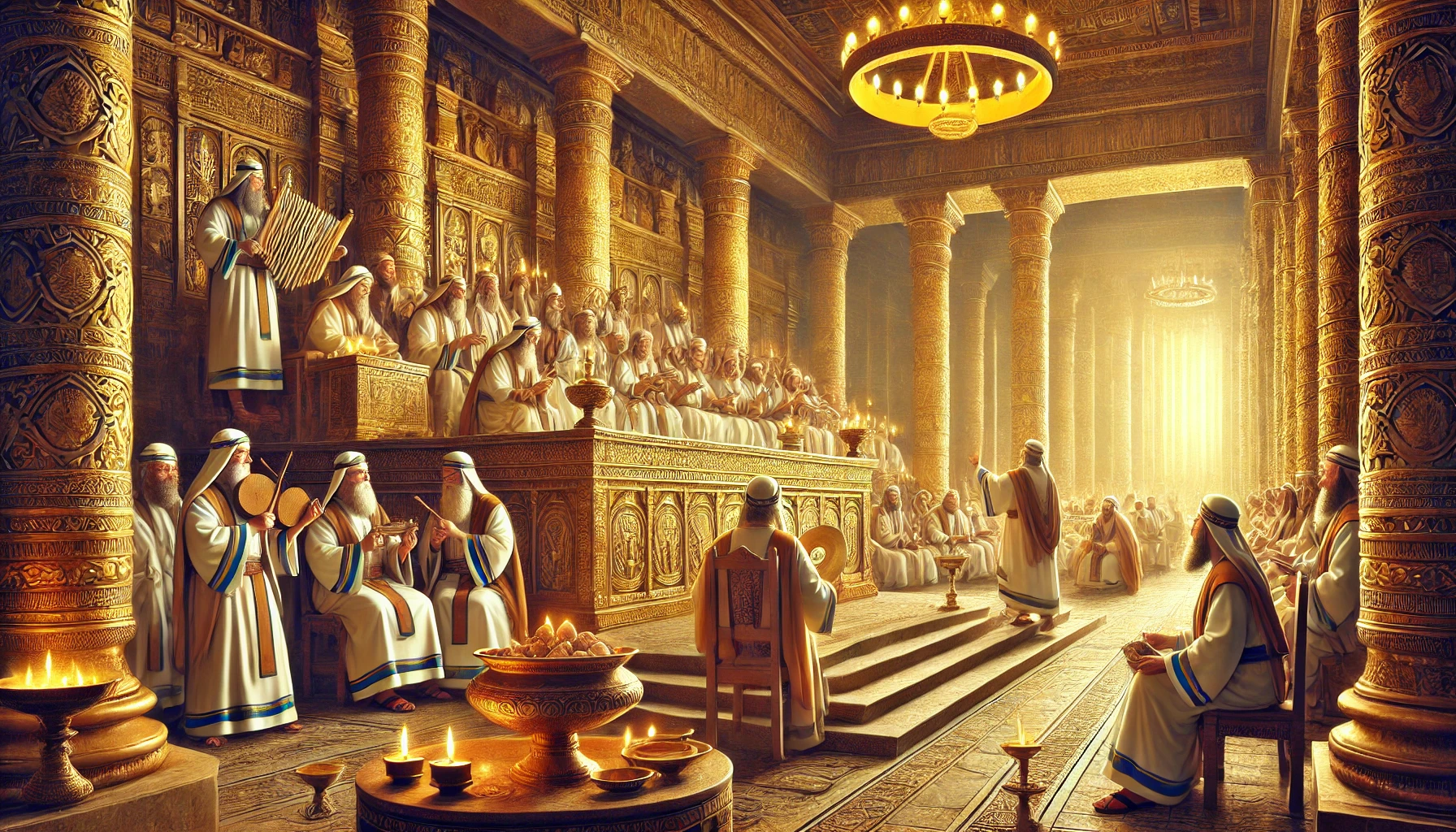
“And the people of Israel who were present at Jerusalem kept the Feast of Unleavened Bread seven days with great gladness... and the Levites and the priests praised YHWH day by day...” (v. 21)
Worship now flows freely. Joy is no longer coerced but abundant. Music and praise permeate the atmosphere, suggesting a return of God’s presence.
“Hezekiah spoke encouragingly to all the Levites who showed good skill...” (v. 22)
Hezekiah acts not just as a political leader but as a spiritual shepherd. He affirms those who lead in worship, honouring their role in facilitating revival.
Life Application: Joy follows obedience. Worship is not a duty but a delight when the heart is aligned with God (Psalm 16:11).
An Extra Week: Revival Extended (vv. 23-27)
“Then the whole assembly agreed together to keep the feast for another seven days. So they kept it another seven days with gladness.” (v. 23)
This spontaneous extension of the feast is remarkable. What began as a delayed Passover becomes a double festival. The people are so captivated by God’s presence that they linger.
“There was great joy in Jerusalem, for since the time of Solomon... there had been nothing like this in Jerusalem.” (v. 26)
Revival surpasses historical memory. The chronicler compares this moment to Solomon’s temple dedication (2 Chronicles 7:1-10).
“Their prayer came to His holy habitation in heaven.” (v. 27)
There is no joy like that found in God’s presence.
Heaven responds. Earth and heaven are once again in communion. This is sacred geography at play; the earthly temple once again becomes a conduit to the heavenly realm. In essence, the entire event is covenant renewal expressed through joy, unity, and heartfelt worship.
Life Application: When God moves, don’t rush away. Make room for extended praise, repentance, and restoration. There is no joy like that found in God’s presence (Psalm 84:10).
Conclusion
2 Chronicles 30 is a masterpiece of spiritual leadership and divine grace. Hezekiah models a shepherd-king who knows that national restoration begins with worship. His inclusive invitation, intercessory heart, and courageous leadership lead to one of the greatest revivals in Judah’s history.
From a delayed Passover to an extended feast, the chapter testifies to God’s willingness to bless imperfect but sincere worship. In a divided kingdom and a defiled temple, Hezekiah’s actions bridge gaps, heal wounds, and draw heaven’s attention.
In our time, marked by division, ritualism, and forgetfulness, Hezekiah’s call rings afresh: Return to YHWH that He may return to you. The joy of unity and the power of worship await those who answer.
Nick Thompson, 15/05/2026