AI Growth Zones and Data Centres
And the Christian Question of Stewardship
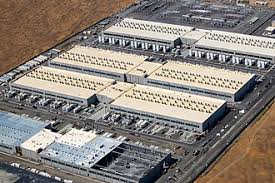 As you may be aware, the government has announced the creation of AI Growth Zones and a major expansion of AI computing infrastructure across the United Kingdom. Several proposed sites are expected to have capacities of 500 megawatts (that’s 500 million watts) or more, and government forecasts suggest the UK may require at least 6 gigawatts (6,000 megawatts) of AI-capable data-centre capacity by 2030.
Though not currently confirmed by the UK Government, a number of mainstream media outlets have said their plan is to build as many as 500 AI data centres around the country. I should share a possible conflict of interest in that one of the sites that has already been granted planning permission is right on my doorstep in North Lincolnshire.
The broader question remains highly relevant: What happens when a nation commits itself to becoming an AI superpower?
The New Towers of Babel?
When reading government policy papers, one cannot help but recall the account of the Tower of Babel in the Book of Genesis. The people said: Let us build ourselves a city and a tower whose top reaches to heaven (Gen 11:4). The issue was not architecture; rather, the concentration of power, knowledge and control apart from God. Today's AI infrastructure may not be built of bricks, but of silicon, fibre-optic cables, transformers, cooling systems and vast warehouses of servers. Yet the same question emerges:
What kind of civilisation are we constructing, and to whose glory?
The broader question remains highly relevant: What happens when a nation commits itself to becoming an AI superpower?
Government documents openly state that AI Growth Zones are intended to accelerate investment, increase economic growth, transform public services and strengthen national security. They are expected to attract tens of billions of pounds in investment. From a biblical perspective, technology itself is not evil. However, it was the descendants of Cain, using knowledge imparted from the fallen bene elohim (‘sons of God’) who developed tools, metallurgy and music. Notwithstanding that, human creativity is part of the image of God.
The key question was then and is now, whether technology remains a servant or becomes a master.
How Much Data Could These Centres Hold?
The scale is difficult to comprehend. A single hyperscale AI data centre may contain tens of thousands, or eventually hundreds of thousands, of advanced processors. Government planning assumes sites capable of 500 MW or more, with some potentially exceeding 1 GW. The data stored and processed may include: -
-
Medical records
-
Financial transactions
-
Government databases
-
CCTV footage
-
Communications metadata
-
Consumer purchasing habits
-
Location histories
-
Social-media activity
-
Educational records
-
Scientific research
-
Defence and intelligence information
-
AI training datasets scraped from the internet
In practical terms, these systems would become repositories of national memory. The Psalmist writes:
The eyes of YHWH are in every place (Prov 15:3). Historically, Christians have understood omniscience as belonging to God alone. Modern surveillance architectures raise a profound theological question: what happens when states and corporations seek a form of synthetic omniscience? While AI cannot truly know as God knows, it can aggregate and analyse human behaviour at scales unimaginable only decades ago.
Modern surveillance architectures raise a profound theological question: what happens when states and corporations seek a form of synthetic omniscience?
Who Pays?
The public often hears that private investment is funding AI infrastructure. That is partly true. Major beneficiaries include companies such as Microsoft, Google, Amazon, NVIDIA and numerous data-centre operators and investors. Large private investments have already been announced. Yet government policy also includes: -
-
Planning reform
-
Priority grid access
-
Energy discounts
-
Public infrastructure support
-
Public-sector capital designed to unlock private investment.
These measures effectively socialise part of the cost while privatising much of the profit. The Christian concern is not merely economic. Scripture repeatedly warns against systems where wealth concentrates into fewer hands:
Woe to those who join house to house and add field to field (Isa 5:8).
The concern is not success itself but the accumulation of power that diminishes community, accountability and justice.
Pressure on the National Grid
Perhaps the most immediate issue is energy. Government forecasts suggest the UK may need at least 6 GW of AI-capable data-centre capacity by 2030. To put this into perspective, government documents describe a 500 MW AI site as consuming power comparable to roughly two million homes. This creates several consequences: -
1. Grid Competition
AI facilities compete with: -
-
Housing developments
-
Industry
-
Transport electrification
-
Heat-pump deployment
-
Existing domestic demand.
The concern is not success itself but the accumulation of power that diminishes community, accountability and justice.
Concerns have already emerged that data centres could receive priority grid connections over other projects.
2. New Power Infrastructure
Some proposals involve: -
-
New transmission lines
-
Dedicated substations
-
Renewable generation
-
Potential nuclear generation
-
In some cases gas-fired generation.
3. Increased Consumer Costs
Although policymakers hope AI-driven economic growth offsets costs, infrastructure investments ultimately filter through electricity markets, taxation or public spending. The ordinary citizen often pays indirectly.
Environmental Questions
Christians have a stewardship mandate:
YHWH God took the man and put him in the garden to work it and take care of it (Gen 2:15). This responsibility extends beyond carbon accounting.
Land Use: -
-
Large AI campuses can occupy hundreds of acres
-
Water Use
-
Many data centres require enormous cooling systems.
Materials: - Servers depend upon: -
-
Rare earth elements
-
Copper
-
Lithium
-
Aluminium
-
Concrete
-
Steel.
There is ongoing scientific debate regarding the biological effects of low-level EMF exposure.
Every AI response ultimately rests on physical extraction somewhere in the world. The illusion of a "cloud" often obscures the reality of mines, factories and power stations.
The EMF Question
Many Christians, environmental researchers and independent investigators have expressed concern regarding electromagnetic fields (EMFs) associated with modern telecommunications and data infrastructure. Here some caution is needed.
There is ongoing scientific debate regarding the biological effects of low-level EMF exposure. Mainstream health authorities, urged on by big business and big business backed research, generally conclude that exposure below established limits has not been proven to cause widespread harm.
However, research continues in several areas, particularly in the magnification effect as frequency ranges creep closer and closer to the core human body frequency. It is important to distinguish between: -
-
Established evidence,
-
Emerging evidence
-
Currently unproven theories
It is important that these are not conflated.
Marconi and the Isle of Wight
One story that is often circulated in alternative research circles concerns the introduction of early wireless transmission systems associated with Guglielmo Marconi and alleged, yet tracked, declines in bee populations around transmission sites on the Isle of Wight. This claim appears frequently in discussions of environmental EMF impacts and is directly refuted by mainstream academics and industry sources. They claim that the historical evidence directly linking Marconi's transmissions to bee collapse is not well established in mainstream scientific literature.
As Christians committed to truth, we should avoid overstating what can be demonstrated, but we should equally not be shy of laying out historic facts ...
It is interesting, certainly to me, that they do not contest the collapse in bee population, just the idea of connecting that to the beginning of the radio transmissions. As Christians committed to truth, we should avoid overstating what can be demonstrated, but we should equally not be shy of laying out historic facts, even when the links are claimed as circumstantial by the mainstream. I say this because the broader concern remains valid: How do large-scale electromagnetic environments affect ecosystems over decades? That one question deserves continued investigation rather than dismissal.
Sound Pollution: The Forgotten Issue
One of the least discussed impacts is noise. Data centres are not silent; they contain: -
-
Cooling towers
-
Fans
-
Chillers
-
Backup generators
-
Transformers.
Residents near some facilities report persistent low-frequency humming and unlike visible pollution, sound pollution invisibly enters homes continually. Scripture repeatedly associates peace with quietness:
My people will live in peaceful dwelling places, in secure homes, in undisturbed places of rest (Isa 32:18).
If communities are asked to host infrastructure that serves global corporations, questions of local wellbeing become morally significant.
The Hidden Rainbow Perspective
Arthur Firstenberg's
The Hidden Rainbow argues that major advances in electrical technology have repeatedly coincided with biological and health disruptions. The book has become influential among critics of wireless technologies, not least because of the weight of circumstantial evidence that is dismissed but never openly investigated by mainstream authorities.
Technological power should not outrun wisdom.
As a result the book resides in the currently unproven theory category but remains compelling simply because of the consistency and weight of the circumstantial evidence it provides. This includes the prediction of a flu-like epidemic impacting the world during the launch and implementation of some 40,000 Low Earth Orbit communications satellites (LEO Comsat’s) in late 2019 and through 2020.
I would suggest that from a Christian perspective, the value of the book lies not exclusively in accepting every conclusion, but in recognising its central warning: technological power should not outrun wisdom. This echoes biblical teaching and 2nd Temple literature which Jesus used and quoted. Sirach states:
Knowledge without wisdom is not profitable, paraphrased from themes found throughout Wisdom of Sirach. Likewise, the Apostle Paul warns:
Knowledge puffs up, but love builds up (1 Cor 8:1).
The modern world possesses unprecedented knowledge and unprecedented power. Whether it possesses corresponding wisdom remains uncertain.
Who Ultimately Benefits?
The government's stated aim is national prosperity. Potential beneficiaries include: -
-
Technology companies
-
Cloud providers
-
AI startups
-
Investors
-
Property developers
-
Energy suppliers
-
Government agencies
-
Universities and researchers.
Potential benefits may include: -
-
Medical advances
-
Scientific discovery
-
Productivity improvements
-
Better public services.
Will this infrastructure help us love God and neighbour more faithfully, or will it draw society further into systems of control, consumption and dependence?
Yet history teaches that technological revolutions rarely distribute rewards evenly. The biblical concern is not whether wealth is created. It is whether communities flourish.
A Christian Conclusion
The deepest issue is not AI; it is anthropology. What do we believe a human being is? Scripture teaches that humanity is
made in God's image (Gen 1:27).
AI systems increasingly reduce people to: -
-
Data points,
-
Behavioural patterns,
-
Probabilities,
-
Consumer profiles.
The danger is not merely surveillance; it is forgetting the sacredness of the person. In the Book of Enoch, humanity is warned about knowledge received without wisdom and power exercised without righteousness. Whether one accepts Enoch as scripture or historical literature, the warning is strikingly relevant. Technology can be a gift. But it can also become an idol.
The Christian response is neither technophobia nor blind enthusiasm. It is discernment. As believers consider the rise of AI Growth Zones and data centres across the United Kingdom, perhaps the most important question is not; How powerful will these machines become?, but rather, will this infrastructure help us love God and neighbour more faithfully, or will it draw society further into systems of control, consumption and dependence?
And that is ultimately a spiritual question, not merely a technological one.
Nick Thompson
Nick Thompson, 26/08/2026