Legacies and Reparations
How far should we go to write historical wrongs?
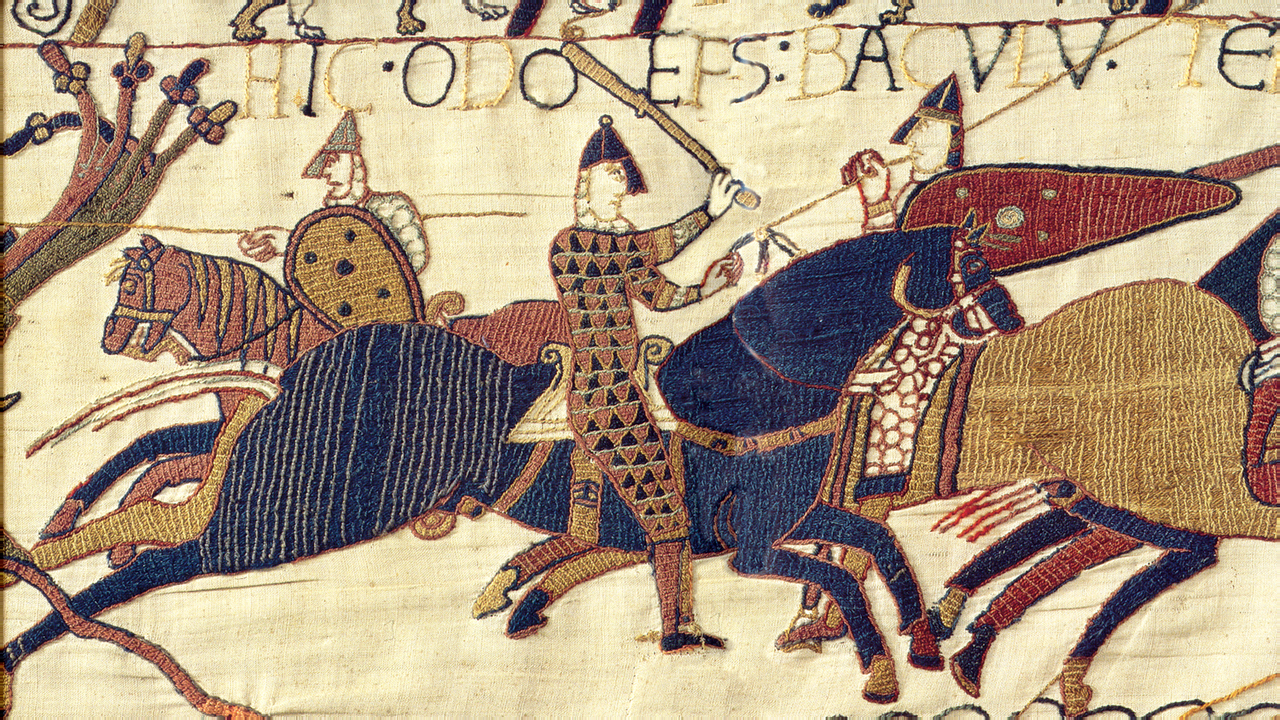 Many people have been flocking to see the Bayeux Tapestry, the 70-metre-long embroidered work of art that depicts the story of the Norman Conquest of England in 1066 at the Battle of Hastings. The tapestry that has sparked intense debate for over three centuries over its true origin is now being used as a reason to celebrate the friendship between Britain and France.
In a time when there is heightening discussion of whether Britain should pay reparations for its role in the transatlantic slave trade - not least by the Church of England choosing to press ahead with ‘Project Spire’, in an attempt to atone for possible historical church involvement in this horror - I would not be the first writer to attempt to link the two scenarios.
I don’t think anyone would genuinely attempt to say that the French owe England any money today; those who do so do it to make a point. Nonetheless, the invasion was truly catastrophic for the English.
Foreign invasion
By the time the Domesday book was written twenty years after the Norman Conquest, according to historian Prof Levi Roach, less than eight percent of the land belonged to the English. Few of the aristocrats survived. Then, in the winter of 1069-70, the ‘Harrying of the North’ took place, to utterly crush Anglo-Saxon rebellion in Northern England. ‘Scorched earth’ tactics were used, not to target fighters, but fields and livestock, with the resultant famine killing up to half of the population, children and elderly being hit hardest. Little of the Old English architecture or culture remained. As Roach wrote, “what William the Conqueror achieved in the years following 1066 can only reasonably be described as an act of hostile colonisation that was every bit as brutal as those better-evidenced cases from more recent history.”
It is not only the castles that survive from that period, but evidence in language, culture, and, quite possibly, social constructs that continue to this day. It is interesting, as a linguist, to note that many of the French words that endure in English today reflect the social divide. The disenfranchised Old English, the poor, would eat the cheapest of foods. The Normans, however, referred to meat by its French name, as they were the ones who could afford to eat it. That is why the various words for meat do not, in the main, correspond to the animal it refers to. Mutton comes from the French word for sheep, ‘mouton’. Pork comes from the French word ‘porc’, not the English ‘pig’. Beef comes from the French for cattle – ‘boeuf’ – not from its English word.
‘Scorched earth’ tactics were used, not to target fighters, but fields and livestock, with the resultant famine killing up to half of the population, children and elderly being hit hardest.
This massive distinction between the wealthy and the poor was based, essentially, upon ethnic lines – and, it can be argued, created the rigid class divide, so long an intrinsic part of English life, and one that has only really begun breaking down in recent decades, since widespread democracy has held sway. Is the still-consequential North-South divide also a remnant of the horrific attempt at ethnic cleansing carried out against the North of the country? The Church itself – the institution, that is – also became a part of the system of ruling Norman elite, with clergy primarily chosen from among the aristocracy.
Legacy of conquest
If the legacy of the Norman invasion lingers on today, it is therefore quite reasonable to argue that large-scale horrors do have an impact on people groups, even generations and centuries later. The aftereffects of the Holocaust show up still in the psyche of many Jewish people who never lived through it. And the legacy left by the transatlantic slave trade is indeed significant. It had impacts on culture, on material wealth, and, indeed, on the collective psychology of many whose ancestors endured it.
However, as many have argued, the entire world was, effectively, involved in the trade of slaves. Not least, the African nations themselves were the ones capturing the slaves from neighbouring areas, to use in whatever way they wished – labour, sex slavery, ritual sacrifice, and, indeed, making a fortune by selling to European slave traders.
History is replete with horrific stories of conquest, empire building, ethnic cleansing, barbaric practices, subjugation of native inhabitants, and, of course, slavery. All of their legacies linger, to a greater or lesser extent.
‘Project Spire’ has endeavoured to grapple with the historic legacy of Britain’s involvement in the slave trade, and therefore, to a questionable extent, the Church of England’s own link with it. Alongside that, many countries are piping up with their own demands for reparations, eyeing up what they consider to be Britain’s great wealth.
But what would be a Kingdom response to all these questions and demands? Should the Church of England really be paying out £100 million on projects to appease consciences over historical horrors? Should the UK government give in and hand over taxpayer’s cash to former colonies? What can we learn from history and from the Bible over how to handle such matters?
Gleanings from the word of God
First, let us go back to the Old Testament. The Torah certainly mandated direct compensation at times, including in relation to slavery. Those who permanently harmed another, through neglect or direct violence, whether slave or free, were liable to pay compensation. However, that was specifically to the person or their immediate family – not many generations later.
Should the Church of England really be paying out £100 million on projects to appease consciences over historical horrors?
Interestingly, we read that at the time of the Exodus, God moved the hearts of the common Egyptian people to give gifts of gold and jewellery to the former Israelite slaves. Neighbours again gave the returning exiles from Persia similar gifts.
So here, we see two things in action: direct compensatory payments for injury; and freewill gifts from neighbours to those affected by slavery/colonial tyranny.
Let’s move forward to the New Testament. I struggle to find a relevant example of payments to those who have been exploited. We certainly don’t see Paul preaching to the Athenians to make reparations for the heinous crimes committed by Antiochus Epiphanes and the Greek Empire on the Holy Land and elsewhere. Nor do we see any call for the Church in Rome to compensate most of the known world for the horrors committed by the mighty Roman Empire.
What we do find is a call to the Corinthians to join the Macedonians and Achaians in a freewill gift to alleviate the poverty experienced by the Church in Jerusalem. Giving to the poor was and is a key tenet of Christianity.
And, of course, Paul urges Philemon to take welcome back his runaway slave Onesimus, but not as slave, rather as a brother. Paul himself offers to pay for anything that Onesimus might owe him. There was no expectation for Philemon to compensate Onesimus. However, welcoming him back as a brother would suggest ensuring he was adequately provided for, in the way that all the better off Christians were expected to share with those fellow Christians in material need.
Forced reparations
History teaches us, however, that forced payments seem to be highly problematic. The most dramatic of these in recent times has to be the reparations forced upon Germany after World War One. Germany was indeed the prominent aggressor – though this came at a time when various powers were manoeuvring for dominance, and all it took was one event to kick off the terrible four-year conflict.
Following Germany’s defeat, they were forced to pay large sums of money for the immense damage that they did. Few would argue with the premise that the sense of grievance by the impoverished German population was the primary factor in the rise of Hitler and the Nazis, leading to yet another global conflict.
A project such as that which takes money that could be helping struggling parishes in order to pay for historic wrongdoing is likely to ameliorate a sense of unfairness and grievance ...
Forced reparations for former wrongdoing, therefore, is a deeply unhelpful concept. And, therefore, a project such as that which takes money that could be helping struggling parishes in order to pay for historic wrongdoing is likely to ameliorate a sense of unfairness and grievance – though I would hope nothing on the scale of Nazi Germany! Similarly, as the cost of living bites here in the UK, a country grappling with huge levels of debt, giving vast sums of taxpayers’ money to Caribbean islands would have a similar effect.
True Kingdom response
My reflection has also been on what would a true Kingdom response be – both for the Church and for the nation.
What is the Kingdom all about? It is, of course, about salvation. It is about the preaching of the good news of what Jesus has done for us, inviting people to respond in repentance and seek to follow our Lord. Yet it doesn’t stop there. As we seek to follow Jesus, we are to follow in His ways.
And His ways are about building His Kingdom. First, it is about loving others as we love ourselves. It is following Jesus in making sacrifices. It’s about feeding the poor. It’s about forgiving each other. It’s about bearing with each other’s weaknesses. It’s about community. It’s about – and this is important – reconciliation between man and woman, slave and free, rich and poor, and between races.
Much as I disliked what the European Union became – over-bureaucratic, micro-managing, undemocratic etc. (feel free to add your own) – it began with some excellent principles. It was a desire for peace and harmony between former enemies. After World War Two, Germany was not punished, but invited into a trading partnership with France, which then widened. Western Europe went from being a war-ravaged dump to a prosperous half-continent – and that’s because forgiveness and reconciliation became at the heart of it. Key perpetrators were hanged following the Nurenburg Trials, and other criminals pursued. But the nation of (West) Germany as a whole was embraced and forgiven. That benefitted both the forgiven, and the forgivers.
Reconciliation
To that end, what is the best way to put right these historical wrongs? It can only be through reconciliation. Admissions of wrongdoings are part of that.
It could, indeed, be strongly argued that it should be for other nations who profited to pay the compensation, should any be deemed necessary.
That admission should include, however, the bigger picture – slavery was a worldwide evil, not just involving Britain. And the UK government paid astronomical amounts of money to bring the Atlantic slave trade to an end. The debt incurred to do so was only paid off in 2015 – a massive 182 years later – by two centuries worth of taxpayers. It is true that nothing was paid to compensate the freed slaves themselves. The money went to buy their freedom from the slave owners – and to patrol the seas to prevent others transporting captured Africans across the ocean.
It could, indeed, be strongly argued that it should be for other nations who profited to pay the compensation, should any be deemed necessary. It should also be, by the same logic, for the descendants of those African rulers who captured the slaves in the first place to sell to traders – making by far the biggest fortune from the misery of others.
In addition to that, it must be remembered that, although Parliament at the time defended slavery, it was only those who were already rich that benefitted from that particular exploitation, and only the rich could be MPs, effectively. The vast majority of Brits enjoyed no real benefits – many of those experienced not dissimilar conditions to the slaves in the colonies, as even young children toiled up to 14 hour days in the cotton mills, dodging dismemberment and death from the machines not built with health and safety in mind. They had little choice about where to find employment. The whole world could be a brutal place at that time.
Nonetheless, reconciliation is the primary goal. We can’t put right all the historical consequences of the slave trade, nor can we of all the other horrors of history. But the Church can lead in reconciliation.
Way forward?
Here is my suggestion for the Church if it wishes to address the historic legacy. Fundraising could take place, ideally on an ecumenical basis, to raise voluntary donations. Perhaps this could be match funded by the Commissioners in charge of the legacy fund that did indeed receive a small proportion of its money from those who profited from the slave trade. These donations should be put towards a programme to strengthen interdependence between nations, with a focus on the former slave colonies. This money could be put towards exchange programmes.
A two-way programme would recognise that there is no hierarchy between peoples, and that we all benefit through co-operation and friendship.
Church staff or volunteers could be given the opportunity to serve for a year or two – whether a youth worker from Surrey going to Jamaica, or a pastor from Barbados coming to work in the west end of Newcastle. The money could also fund short term missions’ teams going both directions. A two-way programme would recognise that there is no hierarchy between peoples, and that we all benefit through co-operation and friendship.
Let us leave no room for grievance. As Colossians 3:13 says, “Bear with each other and forgive one another if any of you has a grievance against someone. Forgive as the Lord forgave you.”
But let us do all we can to promote peace, reconciliation and love for one another. And if that involves forgiving the Norman aristocracy for impoverishing us in the past too, so be it!
Kathryn Price, 25/09/2026